Lytta: A Bold Statement in Digital Typography
In the ever-evolving world of design, typography plays a crucial role in conveying messages and setting visual tone. Among the many typefaces available, Lytta stands out as a distinctive choice for those seeking to elevate their creative projects. This decorative display font is not just another addition to the digital type library; it's a powerful tool that can transform any layout into a visually compelling experience. With its artistic flair and strong character, Lytta offers a unique way to express creativity while maintaining a professional aesthetic.
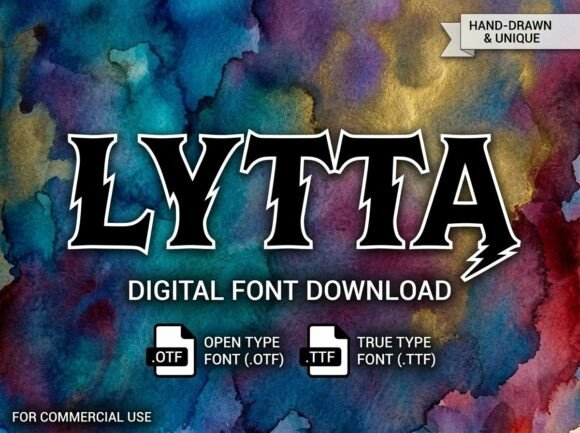
Designed with the modern creator in mind, Lytta is ideal for a wide range of applications. From eye-catching headlines to branding elements and packaging designs, this font brings a level of sophistication that can make any project stand out. Its all-caps format ensures consistency and clarity, making it particularly effective for logos, titles, and decorative initials where boldness is key.
The Artistry Behind Lytta
Lytta’s design is rooted in artistic expression, combining elements that evoke both elegance and strength. The font features intricate details that add depth and personality, allowing it to serve as the centerpiece of any layout. Unlike more traditional typefaces, Lytta embraces a sense of individuality, making it perfect for creators who want to break away from the ordinary and infuse their work with a unique identity.
One of the most notable aspects of Lytta is its versatility. While it excels in high-impact scenarios, it also maintains a level of refinement that can be adapted to various design contexts. Whether used in a minimalist layout or a complex composition, Lytta retains its visual integrity, ensuring that it complements rather than overwhelms the overall design.
Technical Features and Compatibility
For designers working with professional software, Lytta offers two file formats to suit different needs. The OTF (OpenType Font) file provides access to advanced typographic features, making it an excellent choice for those who require precise control over their text. This format is particularly useful in applications such as Adobe Illustrator or InDesign, where customizing letterforms and spacing is essential.
On the other hand, the TTF (TrueType Font) file ensures seamless performance across all operating systems. This makes Lytta accessible to a broader audience, including those who may not have access to specialized design tools. Regardless of the platform, users can rely on Lytta to deliver consistent and high-quality results without compromising on style or functionality.
Applications and Use Cases
The all-caps nature of Lytta makes it especially well-suited for specific use cases where clarity and impact are paramount. For instance, in branding, this font can be used to create memorable logos that immediately capture attention. Its strong presence helps establish a brand’s identity, reinforcing its message through visual storytelling.
In the realm of packaging design, Lytta can be employed to craft striking labels and product names that differentiate a brand in a competitive market. The font’s decorative elements add a touch of luxury, making it ideal for high-end products that aim to convey exclusivity and quality. When paired with appropriate color schemes and imagery, Lytta enhances the overall appeal of the packaging, drawing consumers in with its visual allure.
Considerations for Designers
While Lytta is a powerful tool, it’s important to consider its limitations. As an all-caps display typeface, it does not include lowercase letters, which means it should be used strategically. Designers should take this into account when planning their layouts, ensuring that the font is applied in contexts where uppercase text is appropriate and effective.
Additionally, the font’s decorative nature may not be suitable for every project. In situations where readability is a priority, such as body text or long-form content, Lytta may not be the best choice. However, when used in headings, titles, or other prominent areas, it can add a dynamic element that enhances the overall design without sacrificing legibility.
Integrating Lytta into Creative Workflows
For creators looking to incorporate Lytta into their workflows, the process is straightforward. Once the font is installed, it becomes available in most design applications, allowing users to experiment with different styles and compositions. This ease of integration makes it a valuable asset for both seasoned professionals and emerging artists.
When working with Lytta, it’s helpful to explore its potential through various design experiments. Testing the font in different sizes, weights, and color combinations can reveal new ways to leverage its strengths. By understanding how Lytta interacts with other design elements, creators can unlock its full potential and create more impactful visual narratives.
Conclusion
Lytta represents a fusion of artistry and functionality, offering designers a versatile tool to enhance their creative projects. Its distinct characteristics make it an ideal choice for those who want to add a touch of elegance and strength to their work. Whether used in branding, packaging, or other visual applications, Lytta has the ability to transform ordinary designs into extraordinary ones. By understanding its capabilities and limitations, creators can effectively integrate this font into their workflows and achieve a high-end, professional aesthetic that reflects their unique vision.