Horn: A Dragon Alphabet for Fantasy and Power
For creators, designers, and storytellers who crave a font that commands attention and evokes ancient myth, Horn offers a striking solution. This ornate dragon alphabet font transforms typography into a visual spectacle, blending the elegance of classical Roman letterforms with the raw, mythical energy of dragons. Whether you're designing a fantasy novel cover, crafting a tabletop RPG title, or branding a medieval-themed product, Horn delivers a bold, distinctive aesthetic that stands out in any context.
What Makes Horn Unique?
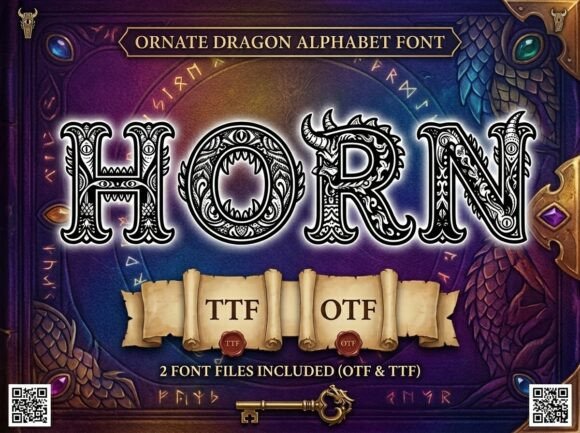
Horn isn’t just a font—it’s a narrative. Each letter is sculpted with meticulous detail, turning every capital into a piece of dark mythology artwork. The serif capitals feature dragon scales, slithering tails, and horned peaks, while the arches of letters like 'A' and 'O' seem to house fierce reptilian eyes. This level of craftsmanship gives Horn a three-dimensional, hand-carved appearance that feels both authentic and powerful.
The font’s robust structure and deep shading enhance its visual impact, making it ideal for headings, logos, and titles where presence matters. Unlike many fantasy fonts that lean too heavily on whimsy, Horn balances intricacy with clarity, ensuring readability without sacrificing its mythical flair.
Key Characteristics of Horn
- Mythical Imagery: Every letter incorporates elements of dragon lore, from scales to horns, creating a cohesive visual theme.
- Classical Foundations: Rooted in traditional Roman letterforms, Horn maintains a timeless elegance while adding fantastical embellishments.
- Three-Dimensional Depth: Shading and structural details give each character a tactile, hand-crafted feel.
- High Contrast: The font’s strong strokes and intricate details make it stand out in both print and digital formats.
Practical Applications for Horn
Horn isn’t just for fantasy enthusiasts—it has real-world applications across multiple industries. For publishers and authors, it’s a perfect choice for fantasy novel covers, where it can instantly communicate the genre and set the tone. Game designers and tabletop RPG creators can use it to craft compelling titles and rulebook headers that capture the essence of their worlds.
In the realm of merchandise, Horn adds an air of authenticity to leather-bound books, medieval-themed products, and even heavy metal album art. Its bold, dramatic look makes it a favorite among musicians and artists looking to convey intensity and mystique through typography.
For businesses targeting niche markets—such as fantasy-themed shops, historical reenactment groups, or medieval festivals—Horn can serve as a key element of branding. It helps establish a unique identity that resonates with audiences who appreciate the beauty of ancient craftsmanship and storytelling.
Why Choose Horn Over Other Fantasy Fonts?
Many fantasy fonts rely on exaggerated shapes or overly decorative elements that can be distracting or difficult to read. Horn, however, strikes a balance between artistic expression and usability. Its structured design ensures that even in large text sizes, the details remain legible without overwhelming the viewer.
Another advantage is its versatility. While it excels in high-impact display settings, it can also be used in smaller sizes for subheadings or accents, provided the design allows for sufficient contrast and spacing. This makes it a flexible tool for a wide range of creative projects.
Using Horn in Different Environments
For digital designers, Horn works best in static visuals such as posters, banners, and UI elements where its intricate details can shine. In web design, it’s recommended to pair it with simpler, more readable fonts for body text to maintain clarity. When using it in print, ensure that the resolution is high enough to capture the fine details, especially in smaller sizes.
Creatives working on personal projects can experiment with Horn in book covers, t-shirt designs, or social media graphics to add a touch of fantasy to their work. For professionals, integrating Horn into brand assets like logos or promotional materials can help differentiate their offerings in competitive markets.
Recommendations for Effective Use
- Limit Usage: Use Horn sparingly to avoid visual clutter. It’s most effective as a headline or focal point rather than body text.
- Pair Thoughtfully: Combine it with clean, modern fonts to create contrast and improve readability.
- Consider Context: Ensure the font aligns with the overall theme of your project. It works best in fantasy, historical, or edgy modern contexts.
- Test at Scale: Preview how Horn looks in different sizes and formats to ensure it maintains its impact without losing detail.
Final Thoughts on Horn
If you’re looking for a font that doesn’t just look good but tells a story, Horn is a standout choice. Its blend of ancient craftsmanship and modern design makes it a versatile tool for anyone involved in creative or commercial projects with a fantasy or historical angle. Whether you’re a designer, writer, or business owner, Horn offers a way to elevate your work with a font that feels both powerful and magical.
As with any typeface, the key to success lies in understanding its strengths and limitations. By using Horn intentionally and thoughtfully, you can harness its full potential to captivate audiences and bring your vision to life with a touch of legendary grandeur.