Sushi: A Playful Typography for the Culinary World
In a world where visual storytelling is as important as the message itself, typography plays a crucial role in capturing attention and conveying personality. Enter Sushi, a unique display font that brings a whimsical twist to the culinary landscape. Designed with creativity and functionality in mind, Sushi transforms text into an edible experience, making it a standout choice for businesses and creators looking to add a touch of fun and sophistication.
What Makes Sushi Unique?
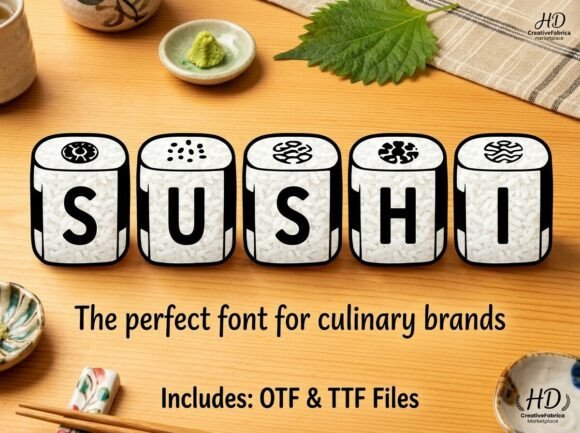
Sushi isn't your average typeface. It features bold, clean sans-serif letterforms that are encased within charming 3D sushi-roll containers. Each glyph is adorned with realistic rice textures and artisanal seaweed wrappers, giving the text a visually rich and appetizing appearance. The font's distinctive illustrative fillings add an extra layer of character, creating a rhythmic and engaging visual style that's hard to ignore.
The design of Sushi is not just about aesthetics; it's about storytelling. Each letter is a mini masterpiece, blending traditional Japanese elements with modern design principles. This makes it ideal for brands that want to communicate a sense of authenticity and creativity without sacrificing professionalism.
Who Can Benefit from Using Sushi?
Sushi is particularly well-suited for restaurant branding, Japanese cuisine menus, food truck logos, and vibrant culinary social media headers. Its playful yet professional look can elevate any brand that wants to stand out in a competitive market. Whether you're running a high-end sushi bar or a casual food truck, Sushi offers a way to express your identity with flair.
For creative professionals, such as graphic designers, marketers, and content creators, Sushi provides a fresh and innovative tool for visual communication. It can be used to create eye-catching headlines, promotional materials, and digital content that resonates with audiences looking for something different.
Key Features and Characteristics
One of the most notable features of Sushi is its 3D design. The letterforms are not just flat shapes but are enclosed within intricate sushi-roll containers that mimic real-life textures and materials. This level of detail adds depth and dimension to the text, making it more engaging and memorable.
Another key characteristic is the font's versatility. While it's designed with a culinary theme in mind, its playful nature allows it to be used in various contexts beyond food-related projects. From event invitations to product packaging, Sushi can bring a sense of fun and creativity to any design.
The font also includes a range of illustrative fillings that vary by character. These fillings can include everything from traditional ingredients like avocado and salmon to more imaginative elements that reflect the brand's personality. This customization allows users to tailor the font to their specific needs and preferences.
Real-World Applications of Sushi
Let's explore some practical scenarios where Sushi can make a significant impact. For instance, a new sushi restaurant might use the font for its logo, creating a strong visual identity that immediately communicates the establishment's focus on quality and tradition. The 3D effect and detailed textures would help the logo stand out on menus, signage, and marketing materials.
Food trucks that specialize in Japanese cuisine could also benefit from using Sushi. The font's playful and dynamic look would align well with the energetic and mobile nature of a food truck. It could be used on the truck's exterior, social media posts, and even in-store signage to create a cohesive and appealing brand image.
Additionally, Sushi could be used in digital content creation, such as Instagram stories, YouTube thumbnails, or blog headers. Its vibrant and engaging design would capture the attention of online audiences, making it easier to build a following and drive engagement.
Strengths and Considerations
Sushi excels in its ability to blend creativity with functionality. Its unique design makes it highly recognizable, which is essential for brand differentiation. The font's attention to detail ensures that each character is not only visually appealing but also easy to read, maintaining clarity even at smaller sizes.
However, there are some considerations to keep in mind. Due to its intricate design, Sushi may not be suitable for all types of text. It works best for headlines, titles, and short phrases rather than long paragraphs of body text. Users should also be mindful of the font's file size and compatibility with different design software.
Furthermore, while the font's playful nature is a strength, it may not be appropriate for every brand or audience. Businesses that aim for a more traditional or minimalist look might find that Sushi doesn't align with their overall aesthetic. It's important to evaluate whether the font's style matches the brand's identity and target audience.
Evaluating Suitability for Your Project
If you're considering using Sushi for your project, start by defining your goals and audience. Ask yourself: What message do you want to convey? Who is your target audience? How does the font's style align with your brand's personality?
It's also a good idea to experiment with the font in different contexts. Try using it in mockups, prototypes, or sample designs to see how it looks in practice. Pay attention to how it interacts with other design elements, such as colors, images, and layouts.
Finally, consider the technical aspects. Ensure that the font is compatible with your design tools and that it meets the requirements for your intended use, whether it's print, digital, or web-based.
Conclusion
Sushi is more than just a font—it's a creative tool that brings a unique and playful perspective to typography. Its combination of bold design, intricate details, and culinary inspiration makes it a valuable asset for businesses and creators in the food industry and beyond. By understanding its features, applications, and limitations, you can determine whether it's the right fit for your project and how it can help you stand out in a crowded market.